I’ve spent more Sunday afternoons than I can count curled up on my couch, laptop balanced on my knees, disappearing into documentaries about Berlin. There’s something addictive about watching the city’s story unfold on screen—seeing places I walk past daily transformed into historical monuments, learning the names of people whose creativity shaped the neighborhoods I call home. After years here, I thought I knew Berlin. Then I started watching these films, and I realized I’d barely scratched the surface. Every documentary revealed another layer, another Berlin hiding beneath the one I thought I understood.
What makes Berlin such compelling documentary subject matter is the sheer density of its history. In less than a century, this city has been the epicenter of fascism, divided by Cold War politics, reunited in euphoria, and transformed into Europe’s creative capital. It’s been bombed to ruins and rebuilt multiple times. It’s been a laboratory for totalitarianism and a playground for liberation. That’s a lot of material to work with, and filmmakers have been mining it for decades. These twelve documentaries represent my favorites—the ones that changed how I see the city, that sent me wandering through neighborhoods with new eyes, that made me fall in love with Berlin all over again. Some are classics, some are recent, all are essential viewing for anyone trying to understand what makes this place tick.
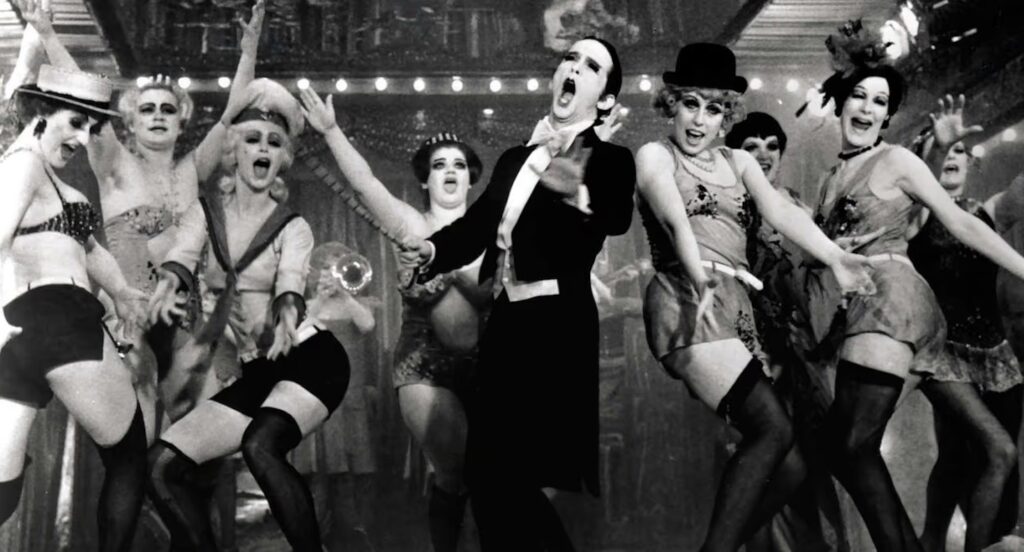
Image source: Legendary Sin Cities / Berlin: Metropolis of Vice
Step back in time to learn about hedonism in Berlin, “the Babylon of the ’20s.” This documentary in the “Legendary Sin Cities” series examines why Berlin earned its reputation as Europe’s most decadent city during the Weimar era. The people of Berlin have always known how to enjoy themselves, but the period between World War I and Hitler’s rise to power took that enjoyment to extremes.
The documentary explores the cabarets, brothels, drug dens, and nightclubs that made Berlin infamous. It examines how economic chaos (hyperinflation) and political instability created a “live for today” mentality that manifested in extreme nightlife and sexual liberation. You see how artists, writers, and performers pushed boundaries that seem shocking even by today’s standards. The film also contextualizes this hedonism within the broader social and political forces at work—how the freedom was always precarious, always threatened by the conservative forces that would eventually crush it. Understanding Weimar Berlin’s reputation for vice is essential for understanding why the Nazis’ promise to restore “order” and “morality” resonated with so many Germans, and why contemporary Berlin still references this era when celebrating its freedoms.
Series: Legendary Sin Cities
More info: IMDB
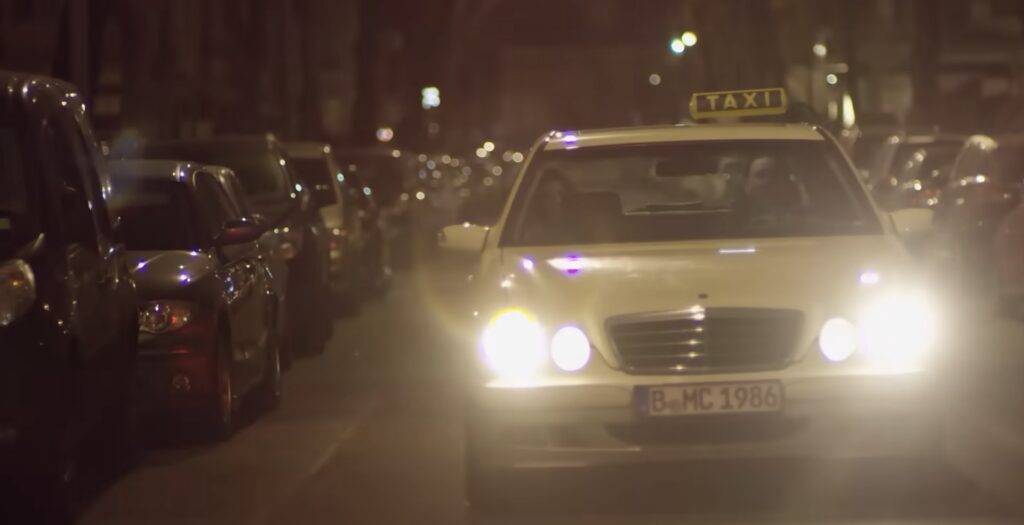
Image source: The Sound of Berlin
This documentary dives deep into Berlin’s musical diversity, exploring everything from techno to jazz and featuring interviews with influential artists across genres. What makes Berlin such a hub for music culture? How does the city continue to shape its soundscape? “The Sound of Berlin” attempts to answer these questions by talking to the people creating the music.
The film moves beyond the obvious techno focus to examine how Berlin attracts musicians from around the world, how the city’s infrastructure (affordable spaces, lenient noise laws, 24-hour culture) supports musical experimentation, and how different musical communities interact and influence each other. You get jazz musicians talking about the improvisational freedom Berlin offers, electronic producers explaining how the city’s industrial architecture influences their sound design, and classical musicians discussing how Berlin’s orchestra scene has evolved. It’s a comprehensive look at music in Berlin that recognizes the city isn’t just about one genre—it’s about creating space for all kinds of sonic exploration.
Production: Arts Unveiled documentary
Year: 2018
More info: IMDB
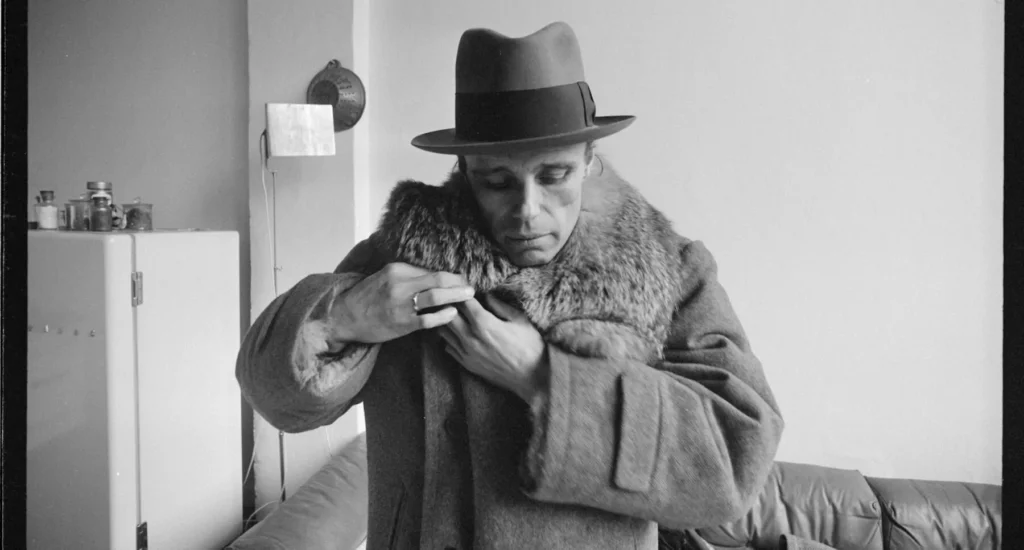
Image source: Beuys (2017)
Joseph Beuys—the man with the fedora, the felt, and the fat corner—was one of the most influential German artists of the 20th century, and Andres Veiel’s documentary finally gives him the film treatment he deserves. Thirty years after his death, Beuys feels like a visionary who was, and still is, ahead of his time. He was the first German artist to receive a solo exhibition at the Guggenheim Museum in New York, while back home his work was often derided as “the most expensive trash of all time.”
Veiel mines rich archival footage that’s never been seen before, showing Beuys’s teachings at the Kunstakademie Düsseldorf, his installations using unusual materials like felt and fat, his legendary “happenings” (covering himself in honey and gold leaf to explain paintings to a dead hare, or locking himself with a coyote), and his lectures about art, politics, and society. The film captures Beuys as philosopher, provocateur, and performance artist—someone who believed that “only art is capable of dismantling the repressive effects of a senile social system.” While Beuys lived and worked in Düsseldorf primarily, his influence on Berlin’s art scene was enormous, and his installations at Hamburger Bahnhof make him essential viewing for understanding contemporary German art. The film premiered at the 2017 Berlinale and offers a psychological portrait of an artist who expanded what art could be and do.
Director: Andres Veiel
Runtime: 107 minutes
Year: 2017
Website: zero one film
More info: Wikipedia | Hyperallergic
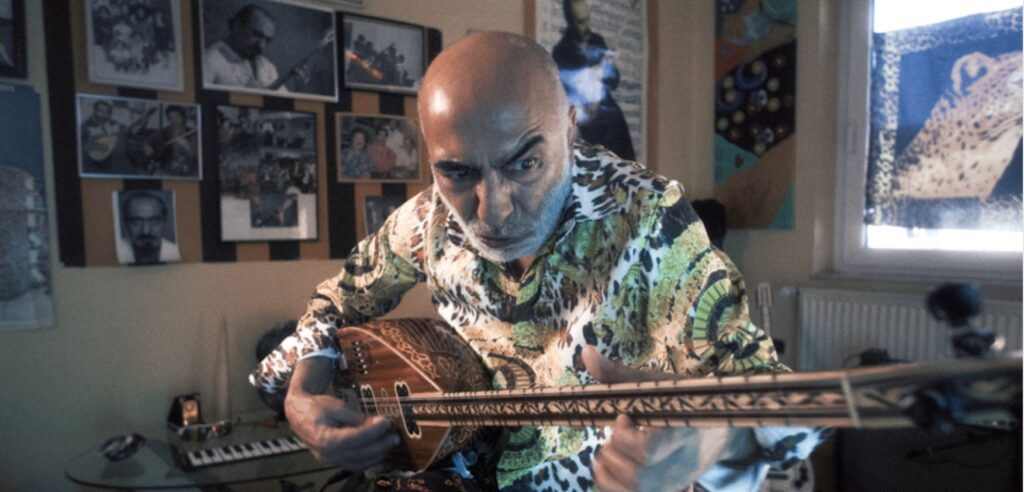
Image source: Aşk, Mark ve Ölüm (2022)
This is the documentary about Berlin that nobody talks about, and that’s exactly the problem Cem Kaya set out to address. “Aşk, Mark ve Ölüm”—the title inspired by a poem by Turkish-German author Aras Ören, which was set to music by the band IDEAL in 1982—tells the unprecedented story of Turkish-German musical culture that developed in Germany from the 1960s onward. It’s a history that’s been completely ignored by mainstream German culture, despite the fact that it represents one of Germany’s largest and most vibrant music scenes.
The documentary is structured in three parts that mirror its title. “Aşk” (Love) explores the melancholic Gurbetçi songs—songs from exile—that expressed the homesickness of the first generation of Turkish guest workers recruited by West Germany in the early 1960s. “Mark” (Deutsche Mark) focuses on the wedding halls and gazino culture that emerged as the community established itself, featuring everything from arabesque to Turkish psychedelic rock. The bazaar at Berlin’s Bülowstraße U-Bahn station becomes a central character here—a piece of home transplanted into the heart of the city. “Ölüm” (Death) addresses the darker turn following racist attacks in the 1980s and 90s, when Turkish-German youth responded by creating protest music, rap, and hip-hop that mixed Turkish and German lyrics.
Director: Cem Kaya
Runtime: 105 minutes
Year: 2022
More info: filmportal.de
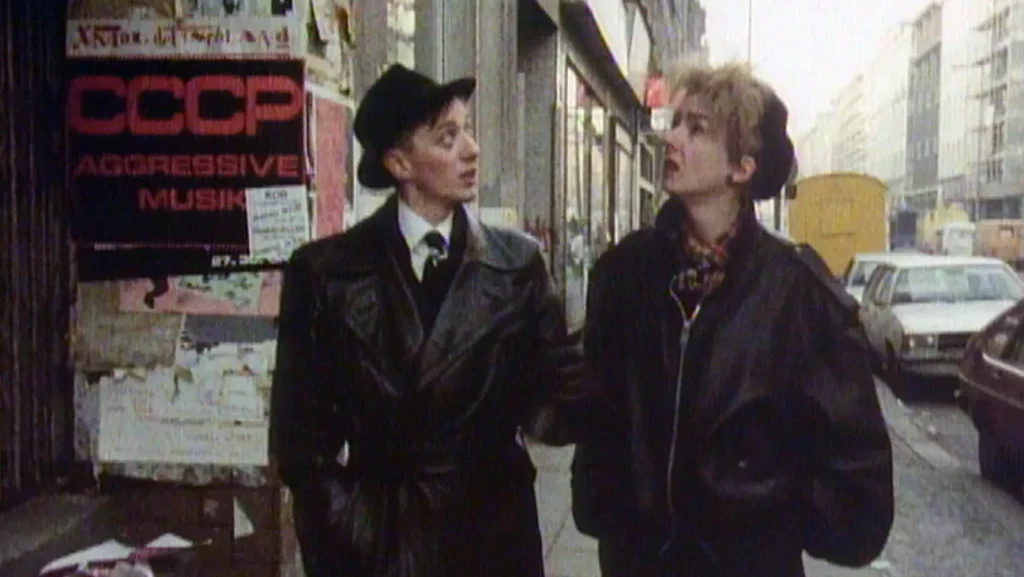
Image source: B-Movie: Lust & Sound in West-Berlin 1979-1989 (2015)
I’m still not entirely sure where the line between documentary and fiction falls in “B-Movie,” and honestly, I don’t care—it’s brilliant either way. The film consists largely of original material shot in West Berlin during the 1980s by Mark Reeder, the British musician and producer who moved to the city in 1978 and never left. It’s part archive, part reconstruction, part love letter to a disappeared city.
The documentary captures the wild, anarchic energy of West Berlin in its final decade as a walled island—a place where draft dodgers, artists, punks, and misfits created their own reality while surrounded by concrete and geopolitics. You get glimpses of legendary venues, performances by bands that defined the era, and the evolution from punk to electronic music that would eventually explode after the Wall fell. Reeder was there for all of it, camera in hand, documenting parties, protests, and the peculiar atmosphere of a city that existed in suspended animation. The film works as both historical document and experiential trip—you don’t just learn about West Berlin in the 80s, you feel it. It’s messy, excessive, occasionally incomprehensible, and absolutely essential for understanding how Berlin earned its reputation as a place where anything goes.
Directors: Jörg A. Hoppe, Heiko Lange, Klaus Maeck
Runtime: 93 minutes
Year: 2015
More info: Hollywoodreporter
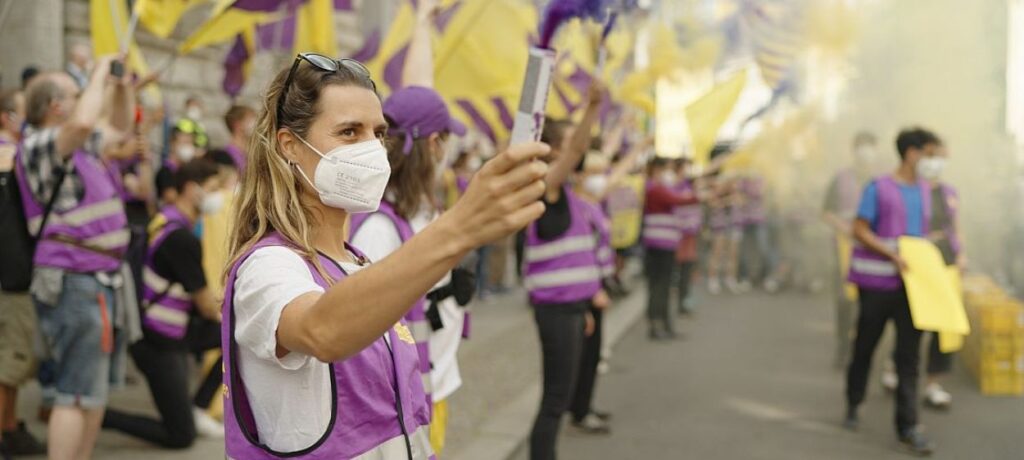
Image source: Capital B: Who Owns Berlin? (2024)
This might be the most important documentary about Berlin created in the past decade, and it’s criminal that English subtitles don’t exist yet. Capital B examines what happened to one of Europe’s biggest cities after reunification—a city that suddenly had incredible opportunities, cheap spaces for grabs, and became the epicenter of a cultural revolution. The five-part series explains Berlin’s transformation step by step, from the fall of the Wall through the techno explosion to today’s gentrification struggles.
The documentary features interviews with key underground figures, mayors, investors, and politicians who shaped the city. It’s also the definitive story of techno music’s entry into German electronic culture—how the metronomic abstract heavy beat arrived from Detroit via the UK and Belgium, and became one of the first musical styles to unite East and West Berlin. The series doesn’t ignore the dark side of reunification, particularly how the Treuhand (the trust company that privatized East German assets) operated with minimal accountability, creating economic winners and losers that still affect German politics today. Reviewers have compared it favorably to “Los Angeles Plays Itself,” calling it possibly the best documentary about any city ever made.
Year: 2024
Format: 5-part series
More info: Germandocumentaries.de
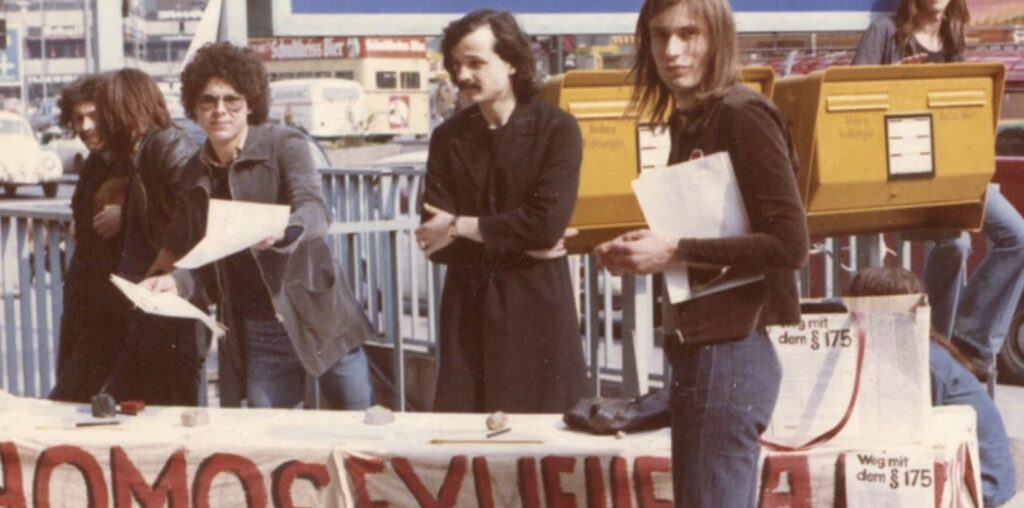
Image source: My Wonderful West Berlin (2017)
Jochen Hick’s documentary is a revelatory chronicle of queer life in West Berlin from the end of World War II until the fall of the Wall in 1989. Today’s hip image of Berlin is largely based on the city’s vibrant queer scene, but few people realize how much of that culture emerged within the grey walls surrounding West Berlin—often despite, not because of, the legal framework.
The film explores how gay men in West Berlin suffered under Paragraph 175, the Nazi-era law that made homosexual acts between men criminal until its reform in 1969. Despite raids and arrests, the queer community not only survived but thrived, transforming West Berlin into a gay capital by the late 1970s. Hick interviews fashion designers, club owners, activists, DJs, and performers—including the legendary Romy Haag, whose club became a sanctuary for the LGBTQ community and attracted David Bowie and Iggy Pop. The film doesn’t shy away from the devastating impact of AIDS in the 1980s, which hit Berlin harder than any other German city. Using never-before-seen archival footage alongside contemporary interviews, Hick creates a moving portrait of resilience, creativity, and community. This is the second part of Hick’s Berlin trilogy, following “Out in East Berlin” (2013), and it’s become an essential document for understanding how Berlin earned its reputation as a queer haven.
Director: Jochen Hick
Runtime: 97 minutes
Year: 2017
Website: my-wonderful-west-berlin.de
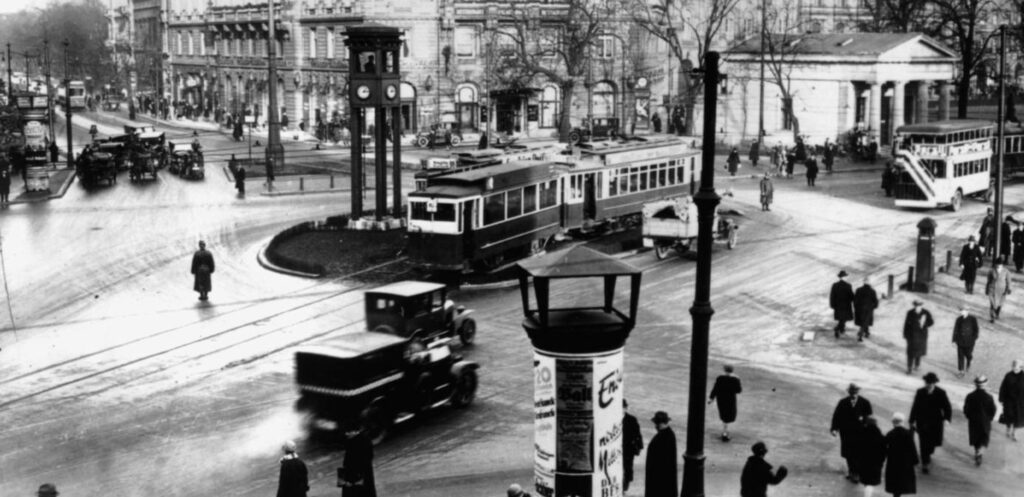
Image source: Berlin: Symphony of a Great City (1927)
Let’s start with the granddaddy of Berlin documentaries, shall we? Walter Ruttmann’s 1927 silent masterpiece captures a single day in Weimar-era Berlin, from dawn to dusk, using pioneering montage techniques that influenced documentary filmmaking for decades to come. The film is divided into five acts representing different parts of the day—morning, work, lunch, afternoon, and evening—creating a rhythm that mirrors the city’s pulse.
What still amazes me about this film is how modern it feels. Ruttmann’s camera captures the energy and chaos of 1920s Berlin—trains arriving, factories operating, shops opening, people rushing through streets—with an eye that could belong to a contemporary filmmaker. There’s no narration, no talking heads, just the visual symphony of urban life. The innovative use of montage creates connections between disparate images—machinery and human labor, wealth and poverty, motion and stillness—that tell you more about Berlin in 65 minutes than most history books manage in 300 pages. It’s essential viewing not just as a historical document but as a work of art that captures something timeless about what it means to live in a metropolis.
Director: Walter Ruttmann
Runtime: 65 minutes
More info: Wikipedia
What strikes me most after watching all these documentaries—sometimes multiple times—is how they reveal Berlin as a city constantly reinventing itself while somehow remaining essentially Berlin. The Weimar excess, the Cold War division, the post-Wall techno explosion, the contemporary gentrification struggles—they’re all different manifestations of the same underlying tensions: freedom versus control, creativity versus commerce, memory versus erasure, inclusion versus exclusion.
These documentaries do something that walking through the city or reading history books can’t quite achieve. They give you access to voices and perspectives that would otherwise remain silent. You hear from the queer activists who fought Paragraph 175, the DJs who turned abandoned buildings into temples of techno, the artists who challenged what art could be, the residents who watched their neighborhoods transform beyond recognition. You see archival footage that makes the past tangible—not as black-and-white photos in a history book, but as lived experience captured on film.
What also becomes clear is how precarious Berlin’s freedoms have always been. The Weimar creativity was crushed by fascism. The West Berlin queer scene thrived despite legal persecution. The early techno culture was constantly threatened by developers and politicians who wanted to “clean up” the city. Contemporary Berlin’s reputation as a creative haven is endangered by rising rents and commercialization. These documentaries remind us that the Berlin we love—weird, creative, tolerant, experimental—isn’t inevitable. It exists because people fought for it, sometimes literally, more often through the stubborn insistence on creating the culture they wanted to see.
My advice? Start with “Berlin: Symphony of a Great City” to see where the documentary tradition began, then jump to “Capital B” if you can access it (or start demanding English subtitles). Watch “My Wonderful West Berlin” and “Children of Berlin” back-to-back to understand how underground culture shaped modern Berlin. If you’re interested in art, “Beuys” is essential. If you want to understand the dark history, watch the National Geographic documentary about underground Berlin. Each film will send you down rabbit holes—you’ll want to visit locations, read more about the people featured, watch related documentaries.
These aren’t just films about Berlin. They’re arguments for why cities matter, why culture matters, why remembering matters. They show how a city’s identity is created by thousands of individual choices—where to open a club, which building to preserve, how to remember history, who gets to live where. Berlin is never finished; it’s always becoming. These documentaries capture moments in that ongoing transformation, preserving them so we can understand how we got here and imagine where we might go next. And in a city as obsessed with its own mythology as Berlin, that work of documentation and reflection isn’t just interesting—it’s essential.

No results available
Reset-THE SPIRIT OF BERLIN, REIMAGINED -THE SPIRIT OF BERLIN, REIMAGINED -THE SPIRIT OF BERLIN, REIMAGINED
– EXPERIENCE BERLIN, EXPERIENCE THE ERA – EXPERIENCE BERLIN, EXPERIENCE THE ERA – EXPERIENCE BERLIN, EXPERIENCE THE ERA