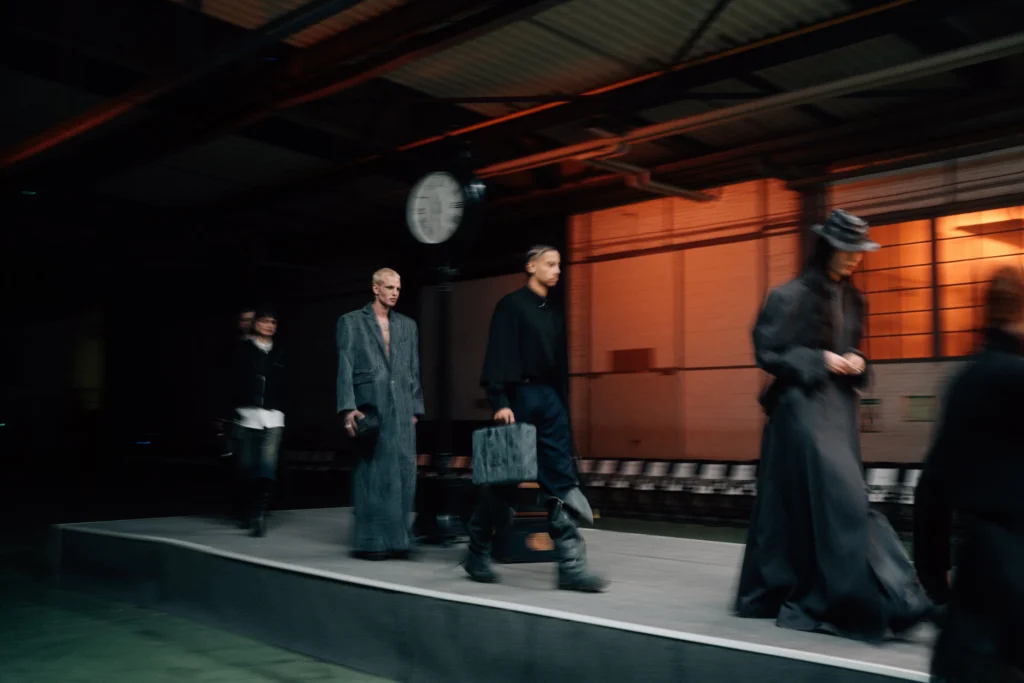
Image source: haderlump.berlin
When people think of Berlin fashion, they usually picture what I call “the uniform”—all black everything, maybe some leather, definitely no color, certainly no frills. It’s the aesthetic that dominates the S-Bahn every morning: minimalist, functional, stripped down to essentials. And look, I get it. I’ve worn enough monochrome outfits to know the appeal. But after years of covering Berlin’s fashion scene and attending every Fashion Week since I moved here, I’ve discovered something most people miss: Berlin’s most interesting fashion designers are actively rebelling against this stereotype. They’re creating work that’s maximalist, colorful, sculptural, experimental—everything that contradictory Berliners claim to hate but secretly love.
The city’s emerging voices in haute couture and experimental fashion are redefining what “Berlin fashion” means, and it’s about damn time. These designers aren’t trying to fit into Paris or Milan’s established paradigms—they’re creating their own visual language rooted in Berlin’s unique combination of punk heritage, queer culture, Turkish-German influences, and post-reunification experimental spirit. What makes them fascinating isn’t just that they reject minimalism (though many do), it’s that they’re using fashion to tell stories about identity, politics, sustainability, and the future. The Fashion Council Germany has been instrumental in nurturing this talent through initiatives like Berlin Contemporary, and the results are some of the most exciting fashion work happening anywhere in Europe right now. These twelve designers represent the future of Berlin fashion—complex, contradictory, unapologetically bold, and refreshingly free from the tyranny of “cool minimalism.”
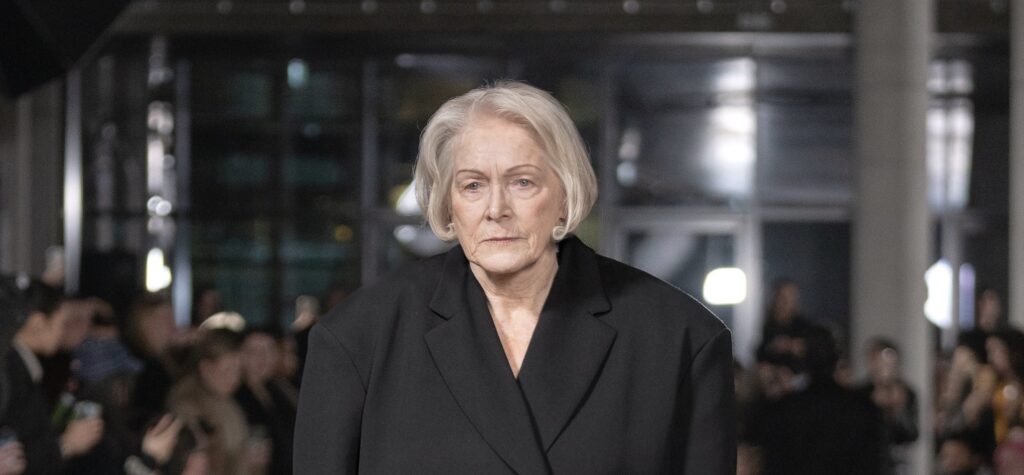
Image source: www.richertbeil.com
Designers: Jale Richert and Michele Beil
Website: richertbeil.com
Jale Richert and Michele Beil make fashion that’s genuinely uncomfortable—not to wear, but to witness. Their Fall 2025 show at the Fichtebunker, an abandoned WWII bunker that once sheltered mothers and children, opened with the sound of a baby crying. Models included actual mothers, children, and pregnant women, with one woman carrying jugs of milk in a transparent raincoat. It was a commentary on maternal exhaustion—physical, emotional, psychological—that hit harder than any conventional runway show.
The duo describes their “intense and formative” 2024 as a year of growth that resulted in powerful, inclusive, diverse collections showcased at Berlin Fashion Week. Their aesthetic is raw and unpolished in the best way—experimental cuts, unexpected materials, silhouettes that challenge conventional beauty. They’re not trying to make clothes for Instagram; they’re using fashion to explore complex emotional states and social conditions. Their work sits firmly in the underground tradition of Berlin fashion, but with a sophistication and conceptual rigor that elevates it beyond mere provocation. Setting shows in derelict bunkers with energetic crowds creates an atmosphere that’s part fashion presentation, part performance art, part political statement. What I appreciate most about Richert Beil is their commitment to using fashion as a medium for exploring difficult subjects—motherhood, fatigue, societal expectations—that haute couture typically ignores. They’re making work that matters, and they’re doing it with an aesthetic that’s distinctly Berlin: uncompromising, experimental, and slightly dangerous.
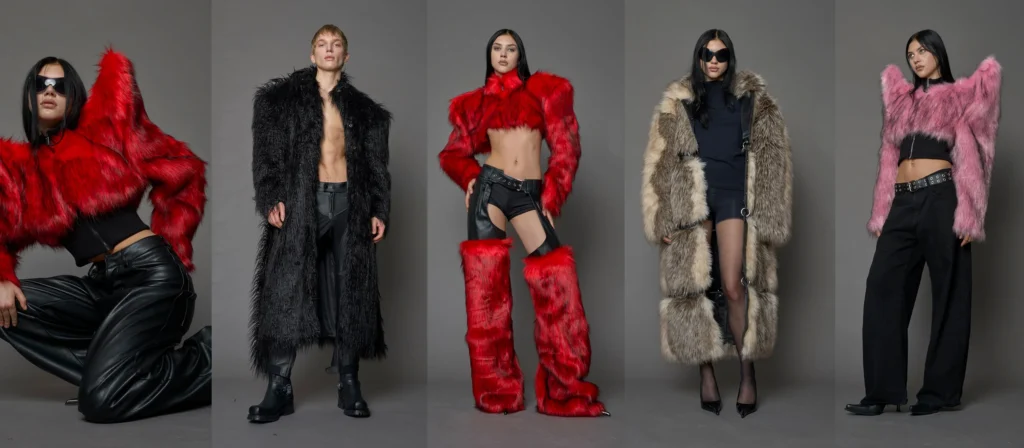
Image source: namilia.com
Designers: Nan Li and Emilia Pfohl
Website: namilia.com
Instagram: @_namilia_
Namilia is what you get when bratty Y2K nostalgia meets queer club culture meets high fashion irony. Founded by design duo Nan Li and Emilia Pfohl, the label has become famous for collections that provoke, seduce, and critique celebrity culture simultaneously. Their “I LOVE OZEMPIC” look at Berlin Fashion Week caused exactly the controversy they intended—600 ravers, queer icons, and guests crowded into the Potsdamer Platz subway station to witness 90s diva pageantry with itty-bitty pieces made in collaboration with Ed Hardy.
The Namilia aesthetic is unapologetically maximalist: rhinestoned everything, cushiony club attire, graphic takes on femme fashion that become transformative. They resew archive and vintage garments into couture gowns, handcrust streetwear with beading and sequin work, and ask provocative questions like “What happens to the diva when the limelight fades?” Their shows are less fashion presentations and more cultural happenings—loud, excessive, packed with references to pop culture, drag performance, and internet aesthetics. Critics might dismiss it as too campy or too referential, but that misses the point. Namilia understands that fashion can be fun, political, critical, and deeply unserious all at once. They’re making clothes for people who want to be seen, who reject good taste in favor of spectacular taste, who understand that sometimes more is more is more. In a city that prides itself on “effortless” style, Namilia’s very effortful, very constructed glamour is a necessary corrective. Plus, their collaborations with brands like Ed Hardy show they understand how to balance high fashion credentials with accessible streetwear energy.
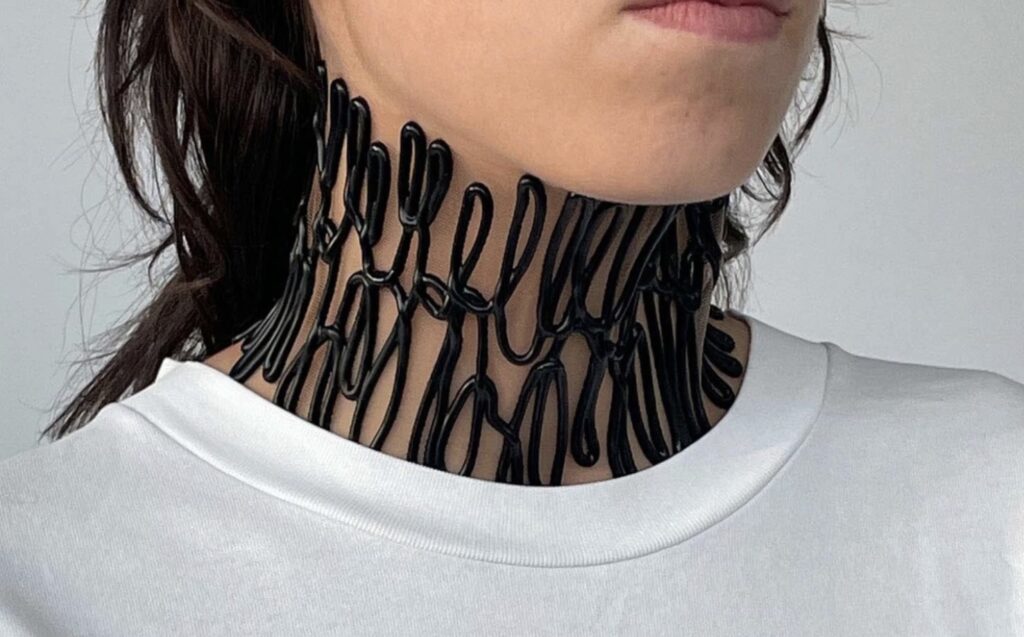
Image source: kasiakucharska.com/
Designer: Kasia Kucharska
Website: kasiakucharska.com
Instagram: @kasiaku
As the FCG/Vogue Fashion Fund winner, Kasia Kucharska arrived at Berlin Fashion Week with significant expectations—and her first runway show more than delivered. The designer’s eponymous label offers a fresh take on artisanal craftsmanship, transforming utilitarian wardrobe pieces into contemporary masterpieces through innovative techniques and materials.
The standout feature of Kucharska’s work is her use of liquid latex lace, which provides structure to garments without relying on traditional stitching techniques. This innovation allows her to create pieces that are simultaneously fluid and architectural, soft and structured. Her approach honors traditional craftsmanship while pushing technical boundaries—each piece reflects meticulous attention to detail and deep understanding of materials. The collection demonstrates how haute couture techniques can be applied to create wearable, contemporary fashion rather than unwearable art pieces. Kucharska’s aesthetic is polished and refined, showing influences from both Polish and German design traditions. What makes her work particularly interesting in the Berlin context is how she bridges high craftsmanship with experimental techniques—it’s not minimalist by any stretch, but it’s also not theatrical or provocative. Instead, it occupies a middle ground that’s often overlooked: fashion that’s genuinely innovative in its construction while remaining elegant and wearable. Her Vogue Fashion Fund win signals the fashion establishment’s recognition that Berlin can produce designers who compete technically with any fashion capital while maintaining their own distinct vision.
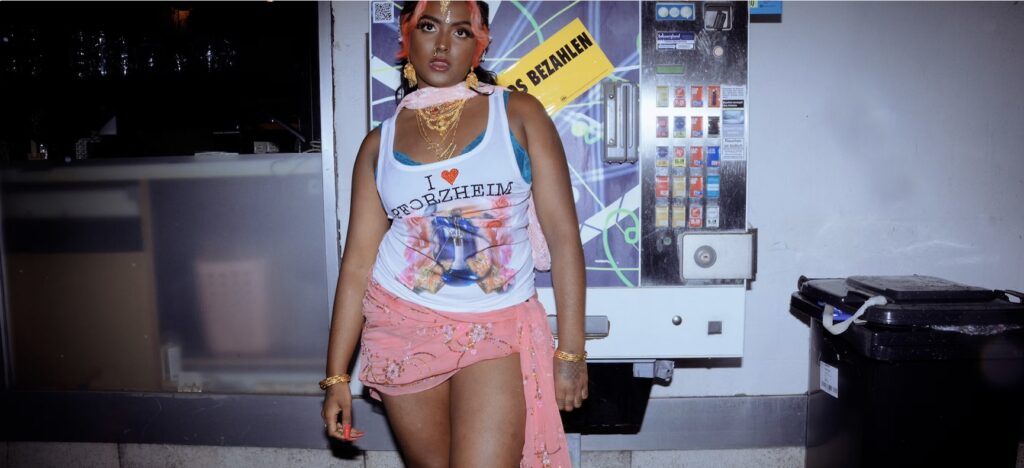
Image source: kitschycouture.store
Designer: Abarna Kugathasan
Instagram: @kitschy.couture
Abarna Kugathasan’s Kitschy Couture tells transcultural, personal, and often socially critical stories through fashion—with a stylistic wink that makes difficult subjects approachable. The designer specializes in wearable lingerie that exists in the space between intimate apparel and ready-to-wear, creating pieces that are simultaneously revealing and empowering.
Her debut show in February was surprisingly the most festive of Fashion Week—a feat considering the competition. For her repeat Berlin Contemporary win, Kugathasan invited guests to Stadtbad Neukölln, where she celebrated a bride in her “Artificial Paradise” collection. The bride, freshly married to herself, goes on a honeymoon and lingers on a giant swan in a Berlin pool amidst lotus blossoms and plastic palms, indulging in immigrant nostalgia. It’s cheeky, colorful, deeply personal, and addresses themes of self-love, cultural identity, and the immigrant experience through fashion rather than manifestos. What I love about Kitschy Couture is how Kugathasan combines serious themes with playful execution—the work addresses real issues around identity and belonging while refusing to be somber about it. The aesthetic draws from South Asian textiles and traditions, Berlin club culture, and lingerie construction, creating something that feels genuinely hybrid. In a fashion landscape that often treats immigrant experiences as either exotic inspiration or serious social commentary, Kugathasan finds a third way: personal, festive, and unapologetically fun while still engaging with complex cultural questions.
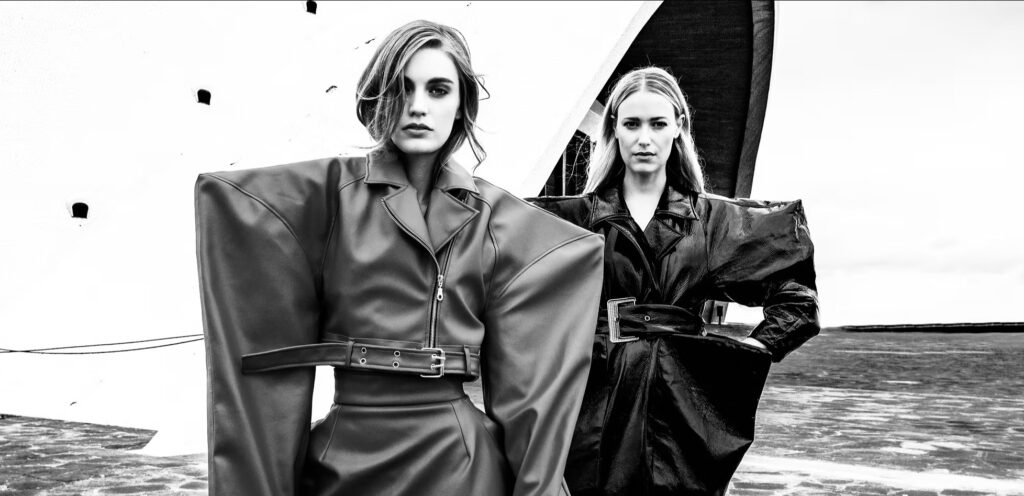
Image source: maximiliangedra.com
Designer: Maximilian Gedra
Instagram: @maximiliangedra
Maximilian Gedra’s “Stalactite” collection is the thorny, fractural lovechild of someone who looked at conventional fashion and thought “but what if it was terrifying?” The protrusive, highly sculptural designs in black and white feature caped shoulders with pointed ends sharp enough to take your eye out, and headpieces are intricate and mottled to obscure and frame models’ eyes and faces.
Gedra works firmly in the avant-garde tradition—this is fashion as art, fashion as sculpture, fashion as statement rather than something anyone would actually wear to the grocery store. Yet there’s something deeply appealing about his uncompromising vision. The pieces look like they emerged from a sci-fi dystopia or a particularly intense fever dream, with geometric precision creating forms that seem almost alive. The all-black-and-white palette gives the work a graphic quality, emphasizing the sculptural elements and shadow play. These are showpieces in the truest sense—designed to provoke reaction, to push boundaries of what fashion can be, to exist as three-dimensional art that happens to be worn by human bodies. What separates Gedra from other avant-garde designers is the technical excellence—these aren’t just wild concepts sketched and approximated, they’re meticulously constructed pieces that achieve exactly what they’re meant to. The sharp angles, the precise geometry, the way the pieces interact with the body and create shadow patterns—it’s all intentional and expertly executed. Gedra represents the extreme end of experimental Berlin fashion, reminding us that the city’s fashion scene includes space for work that’s purely conceptual, purely artistic, purely about pushing fashion into new territory regardless of commercial viability.
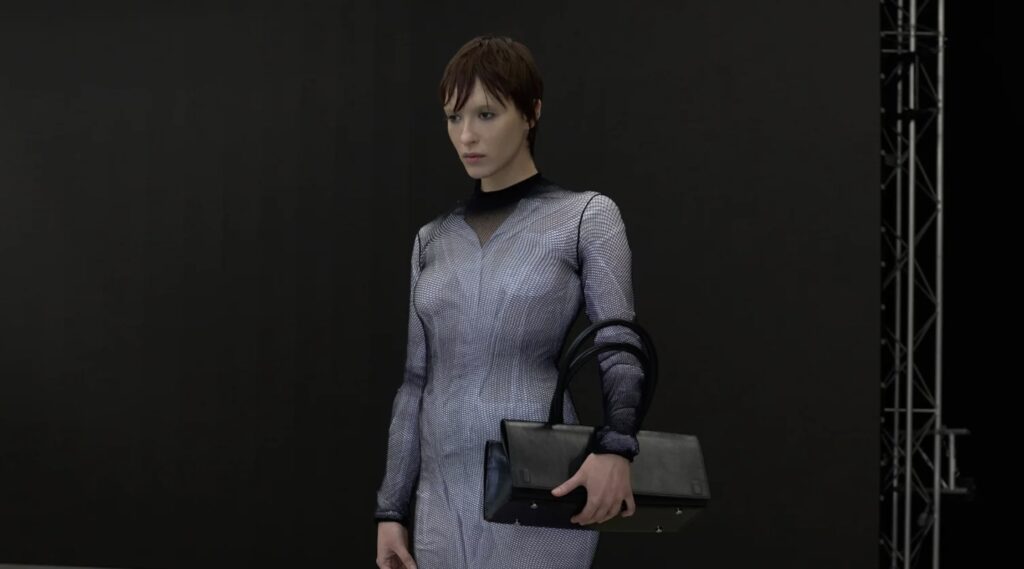
Image source: siaarnika.com
Designer: Sia Arnika
Instagram: @sia.arnika
Sia Arnika opened Berlin Fashion Week Fall 2025 with “Harbour Bitch,” staged in a nondescript industrial space set against white foam and salty seaweed, evoking the fish auctions of her native Danish isle, Mors. The collection takes its name from an infamous local fish plant worker described as “a little scary, sexy and unhinged” like a modern-day Carmen—which perfectly captures Arnika’s aesthetic.
Girls with side-swept emo bangs stormed the runway in fisherman plaid bloomers and neoprene wetsuit hoodies, creating a look that’s simultaneously hardcore and whimsical. Arnika’s work represents the growing Scandi-Berlin connection—she’s based in both Copenhagen and Berlin, and her aesthetic reflects both cities’ influences. From Copenhagen she brings a certain sleekness and attention to functional detail; from Berlin she takes the experimental, slightly unhinged energy that makes anything seem possible. The result is fashion that looks like it belongs on both fashion runways and actual harbors, designed for people who work hard and party harder. There’s a working-class aesthetic to Arnika’s work that’s rare in haute couture—these clothes reference labor, fishing communities, industrial settings, but they’re elevated through cut, material choice, and conceptual framing. The neoprene wetsuit hoodies could actually keep you warm on a boat, but they’re also fashion-forward enough for Berlin nightlife. This practical-yet-experimental approach makes Arnika one of the most interesting emerging designers in Berlin’s scene, offering an alternative to both minimalism and excessive theatricality.
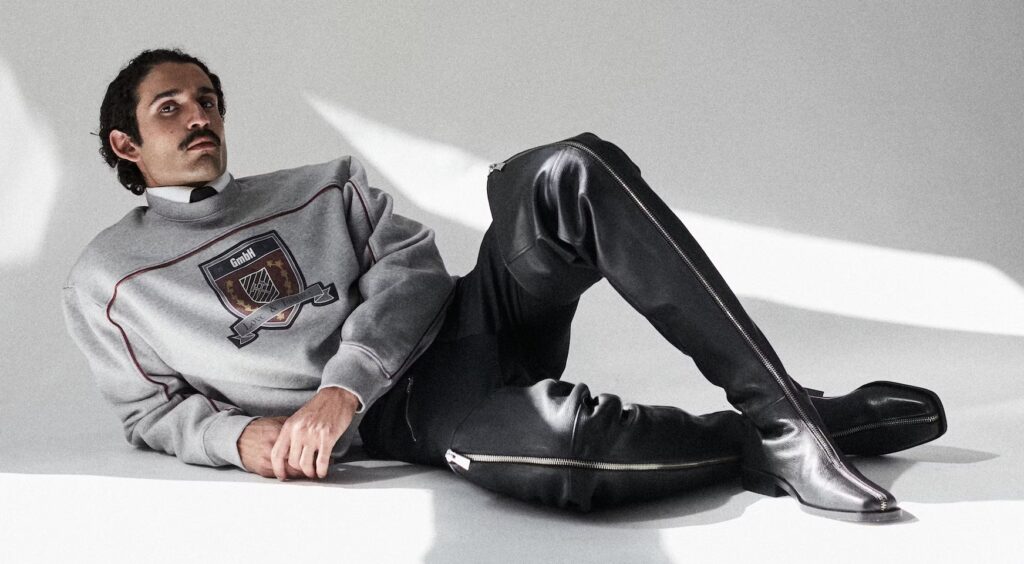
Image source: gmbhgmbh.eu
Designers: Benjamin Alexander Huseby and Serhat Işık
Address: Berlin (specific atelier address not publicly listed)
Website: gmbhgmbh.eu
Instagram: @gmbh_official
Working hours: Showroom by appointment during Fashion Week
GmbH (Gesellschaft mit beschränkter Haftung, the German equivalent of LLC—a brilliantly ironic name) is what happens when two designers refuse to separate fashion from politics. Founded by Norwegian-Russian Benjamin Alexander Huseby and Turkish-German Serhat Işık, the label has built its reputation on making bold political statements through collections that explore diaspora identity, immigrant experiences, and resistance to oppression.
Their work consistently challenges stereotypes about what Berlin fashion should be. The Fall 2024 collection called “Resistance Through Rituals” was filtered through a combat-ready lens, addressing what one would wear to battle in the modern age—not literal warfare but the daily struggles faced by marginalized communities. They’ve prefaced shows with calls for peace in Gaza and cast pro-Palestine activists in their Spring 2025 runway. Their most recent collection took a quietly monumental approach, reflecting on resilience in the face of adversity by drawing inspiration from their fathers—first-generation immigrants who maintained dignity and elegance when arriving in Germany by always looking their best. “It’s about finding one’s own worth when society looks down on you,” they explained. The duo skillfully amalgamates traditionally feminine and masculine elements, transcending gender-specific norms to carve out space for individual expression beyond societal confines. Their aesthetic mixes sharp tailoring with streetwear elements, cultural references from both Western and Middle Eastern traditions, and experimental textiles. What makes GmbH essential is their refusal to make fashion that’s merely pretty—every collection asks difficult questions about identity, belonging, and power in contemporary Europe.
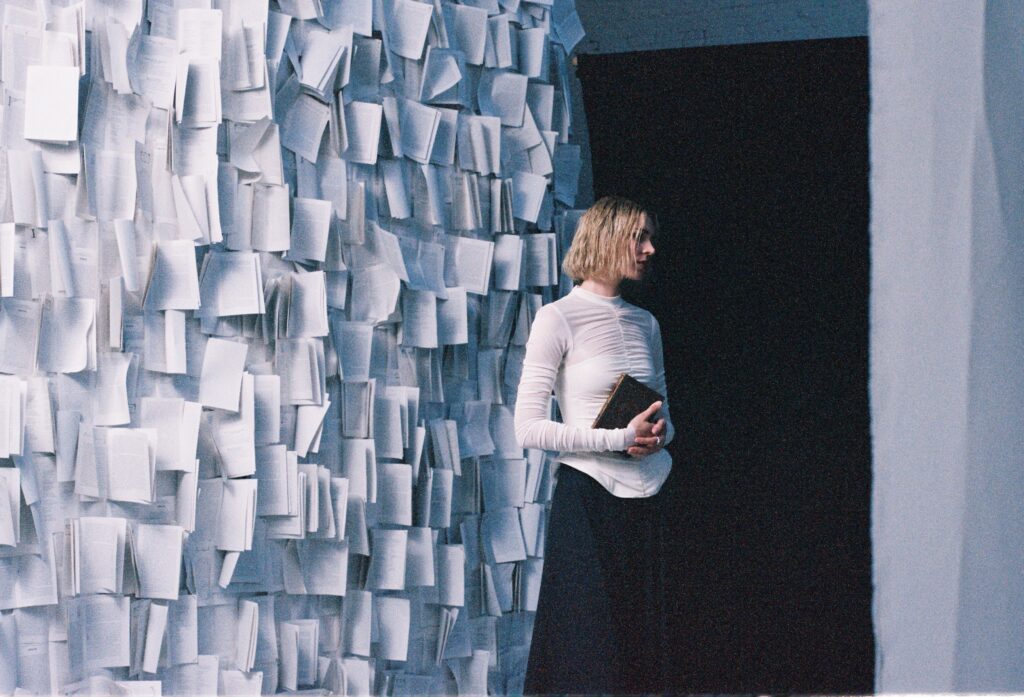
Image source: haderlump.berlin
Designers: Johann Ehrhardt (Creative Director) and Julius Weißenborn (CEO)
Address: Juliusstrasse 64, 12051 Berlin (Neukölln)
Website: haderlump.berlin
Instagram: @haderlump.berlin
HADERLUMP is probably the most exciting thing to emerge from Berlin’s fashion scene in the past five years, and if you haven’t heard of them yet, you will soon. Founded in 2021 by Johann Ehrhardt and Julius Weißenborn, the label has become synonymous with what I call “dystopian elegance”—dark, architectural garments that look like they belong in a Blade Runner sequel but are grounded in serious sustainability principles. The name itself—literally meaning “rag-person” in old German, referring to people who collected fabric scraps in the 18th century—tells you everything about their philosophy.
Every single piece is handcrafted in their Neukölln atelier using exclusively deadstock materials and discarded textiles. This isn’t greenwashing or trendy upcycling—it’s fundamental to how they work. They source from places like Textilhafen Berlin and the Spanish deadstock platform Recovo, transforming materials that would otherwise be destroyed into progressive, high-quality fashion. Their 2024 collaboration with DHL, where they created an entire collection from decommissioned workwear, proved they can make corporate uniforms look genuinely cool. The “AERO” collection shown at Tempelhof Airport paid homage to Amelia Earhart with figure-hugging bomber jackets and advanced pocket placements. Their most recent “SOLIVAGANT” show took place on an actual S-Bahn train at Schöneweide station, with models walking through carriages as commuters watched. That’s peak Berlin energy—making fashion shows that could only happen in this city, using locations that tell their own stories.
What strikes me most after researching and writing about these twelve designers is how little they have in common beyond location and ambition. This isn’t a movement or a trend—it’s twelve completely different visions of what fashion can be, all happening simultaneously in the same city. That diversity, that refusal to cohere into a single aesthetic, might be Berlin’s greatest strength as a fashion capital.
Paris has its elegance, Milan its luxury, New York its commercialism, London its theatrical rebellion. Berlin? Berlin has chaos, experimentation, political engagement, and the freedom that comes from not having centuries of fashion tradition to uphold or reject. These designers aren’t trying to become the next Chanel or Dior—they’re trying to create something that couldn’t exist anywhere else. HADERLUMP’s dystopian sustainability, Marina Hoermanseder’s baroque fetishism, GmbH’s political narratives, Richert Beil’s uncomfortable explorations of motherhood, Namilia’s queer maximalism—none of this fits neatly into established fashion categories, and that’s precisely the point.
The minimalist stereotype persists because it’s easy to spot and easy to replicate. Three young people in all-black Uniqlo basics waiting for the U-Bahn photograph better than the complex, colorful, sometimes confusing work these designers create. But that photograph doesn’t capture what’s actually happening in Berlin fashion. The real story is messier, more interesting, and much more diverse than the stereotype suggests. These designers are working with sustainability mandates, political consciousness, technical innovation, and cultural hybridity—addressing the pressing questions of how fashion should function in the 21st century rather than just making pretty clothes.
What also becomes clear is how crucial institutional support has been. The Fashion Council Germany, the Berlin Senate’s funding, initiatives like Berlin Contemporary and Der Berliner Salon—these structures provide the space and resources for experimental work that might not survive in more commercially-driven fashion capitals. Berlin doesn’t have the luxury market infrastructure of Paris or Milan, which could be seen as a weakness but actually functions as strength. Without pressure to produce commercially viable collections every season, designers have freedom to experiment, to fail, to push boundaries. That freedom—combined with cheap(ish) studio spaces, a culture that values creativity over convention, and a diverse population providing endless inspiration—creates conditions where genuinely new fashion can emerge.
My advice for anyone interested in Berlin fashion? Stop looking for the minimalist uniform and start paying attention to the designers breaking every rule. Visit HADERLUMP’s atelier in Neukölln during Fashion Week. Follow Marina Hoermanseder’s increasingly theatrical Instagram presence. Read GmbH’s political statements alongside their clothing. Watch Richert Beil’s uncomfortable but necessary explorations of overlooked experiences. Support Kitschy Couture’s transcultural storytelling. These designers represent not just Berlin’s fashion future but potentially fashion’s future more broadly—work that’s sustainable by necessity, politically engaged by conviction, technically innovative by ambition, and aesthetically bold by choice. The minimalist stereotype will probably persist because stereotypes are sticky, but for those willing to look deeper, Berlin’s fashion scene is exploding with color, complexity, and creativity that deserves recognition beyond “cool black clothes.” These twelve designers are just the beginning.

No results available
Reset-THE SPIRIT OF BERLIN, REIMAGINED -THE SPIRIT OF BERLIN, REIMAGINED -THE SPIRIT OF BERLIN, REIMAGINED
– EXPERIENCE BERLIN, EXPERIENCE THE ERA – EXPERIENCE BERLIN, EXPERIENCE THE ERA – EXPERIENCE BERLIN, EXPERIENCE THE ERA